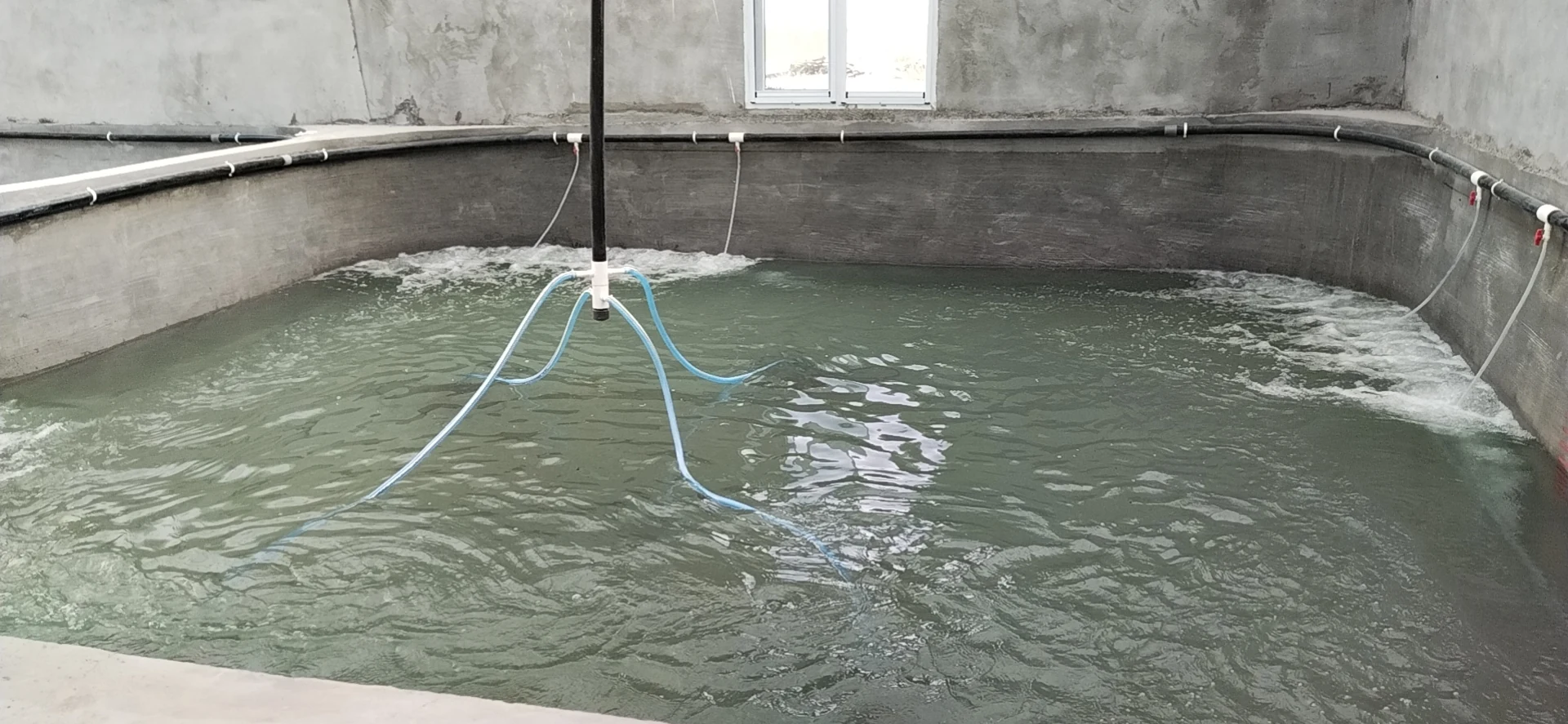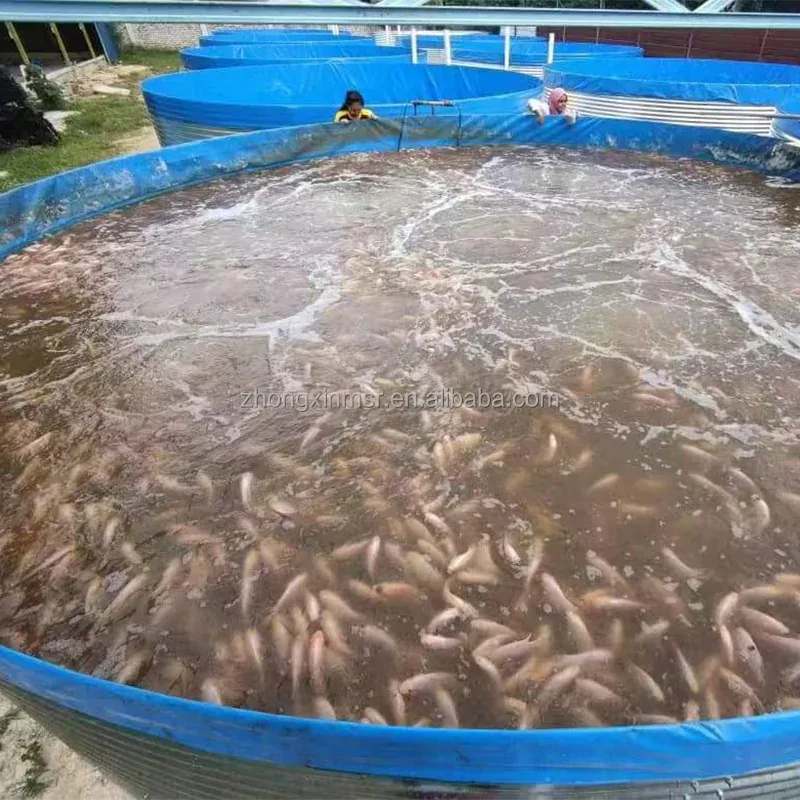
What a complete aeration system is
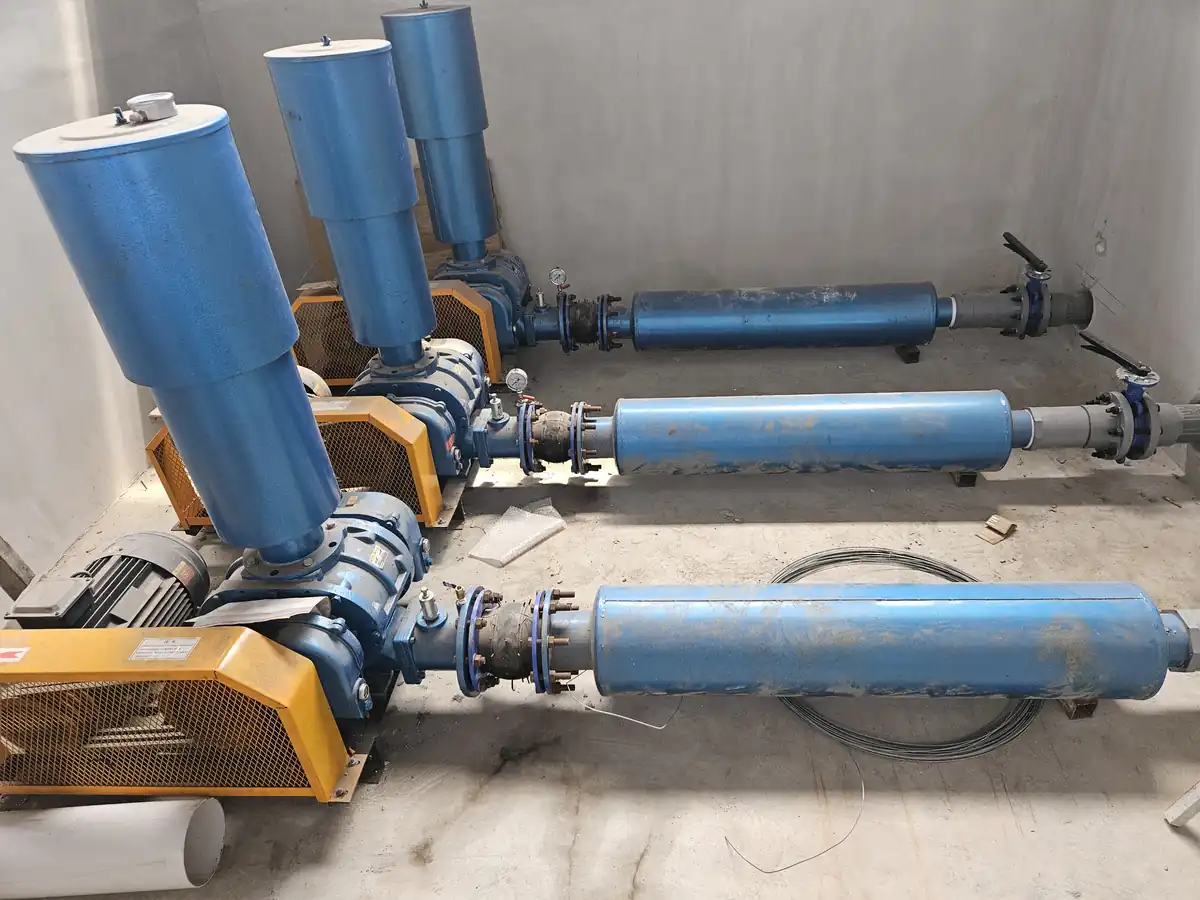
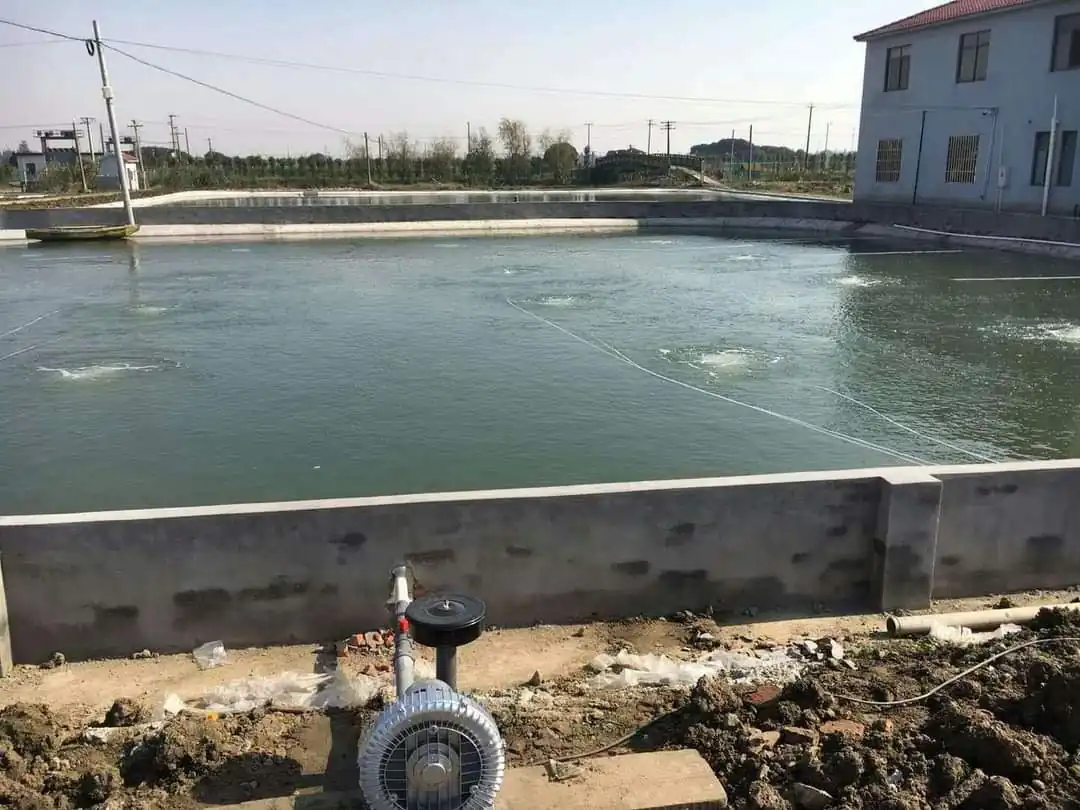
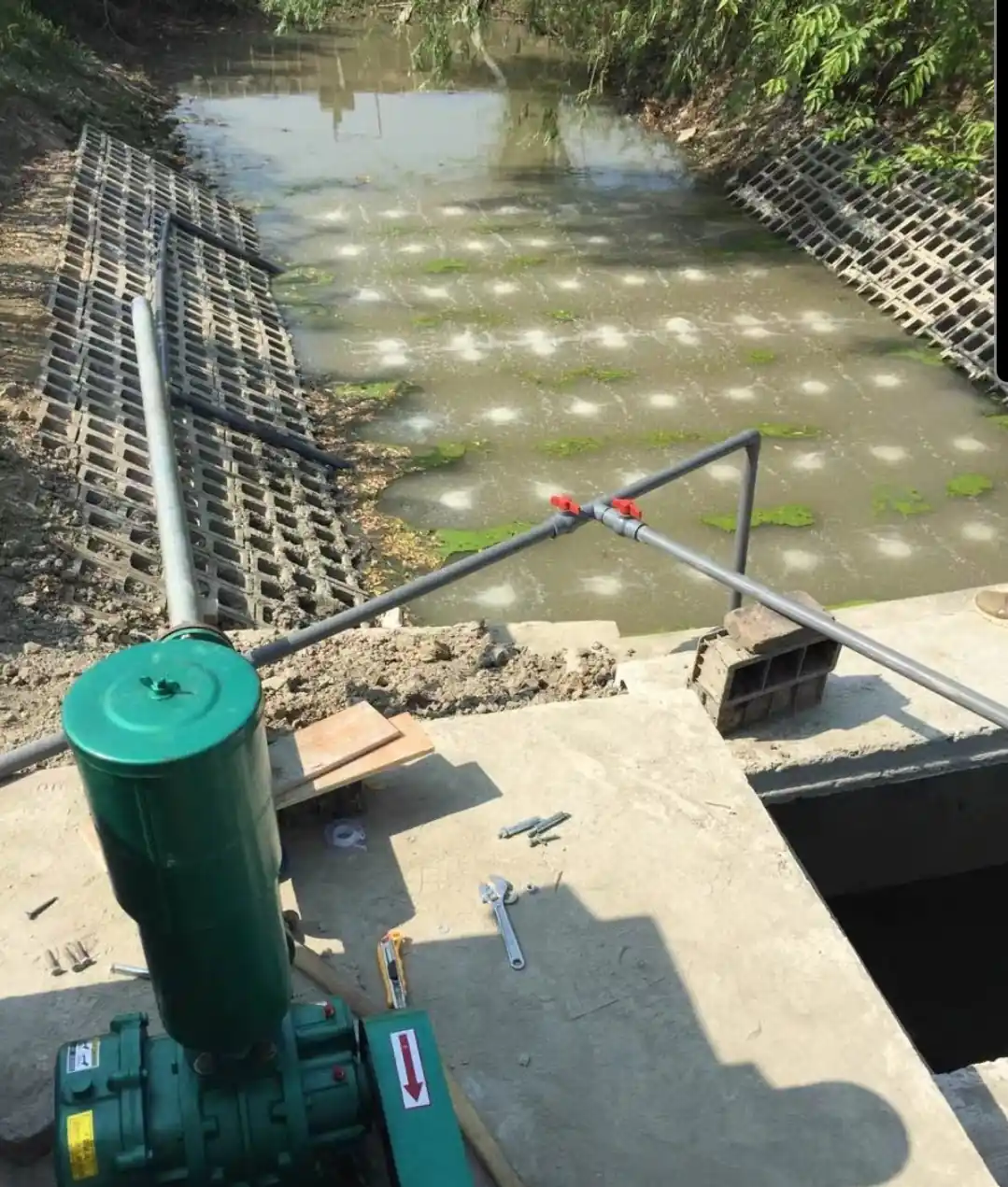
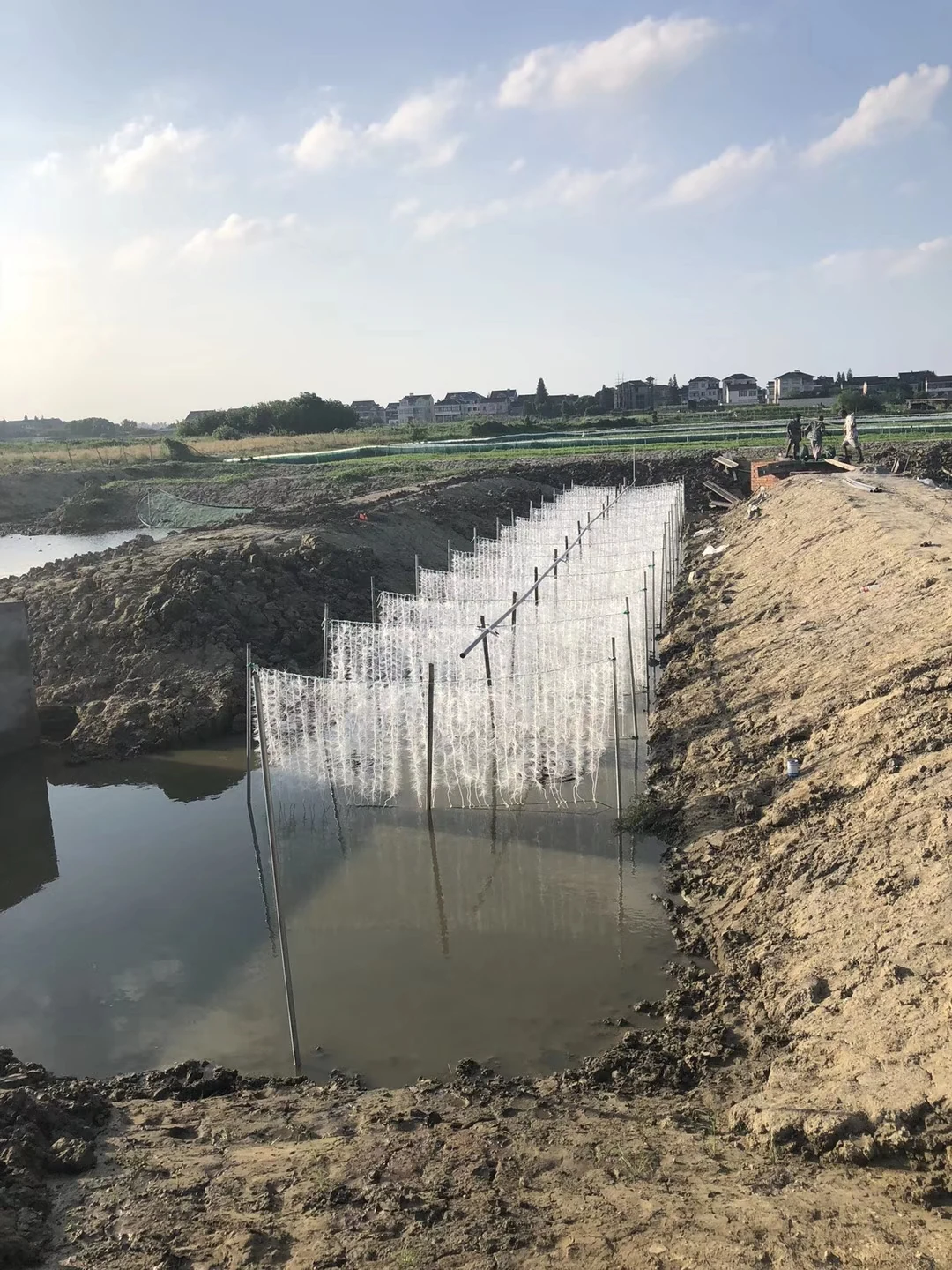
Aeration equipment is the newest family of water-oxygenation systems for aquaculture. A complete unit pairs a roots blower with a main air line, flexible hoses, fittings and aeration tubing (or discs) to form one integrated aeration system.
The hardware
The aeration tubing is a microporous tube made of high-polymer material with pore diameters of roughly 0.01-0.05 mm. Underwater, surface tension keeps water from entering the tube. When the blower delivers clean air at 0.2-0.3 MPa, the air is forced out through the micropores and forms countless micro-bubbles of 0.5-2 mm in the water. The bubbles rise in a mist-like spiral with an effective diffusion reach of about 1.5-3 m from each tube.
The three mechanisms that do the work
1. Downward oxygen exchange. The rising bubble stream and circulation push oxygen — including the oxygen produced by algae in the surface layer — from the surface down to the pond bottom.
2. Greatly increased contact area. Rising fine bubbles maximise the air-water contact surface, sharply improving oxygen transfer into the water.
3. Direct dissolution. Part of the injected air dissolves directly in the water, raising dissolved oxygen on the spot.
Where the technology wins
The combined effect is a uniform distribution of oxygen and nutrients through the whole water column. The system performs especially well in special (high-value) culture and in deeper water, where bottom-layer oxygenation is decisive for stock health. Because the fine bubbles keep the entire water body moving gently, aeration solves the oxygenation bottleneck of high-density, factory-scale, intensive aquaculture — the situations where paddle-wheel and propeller aerators struggle to reach the bottom layers.
Microporous aeration is the quiet, energy-efficient workhorse behind modern intensive farming: the same blower power keeps more water volume oxygenated to the bottom. To dig deeper, see the microporous aeration technology overview, the key technical points for pond installation, and the underwater microporous aeration technique. For system design — blower, main line and tubing sizing for your pond depth — contact us with your water area and average depth.
Frequently asked questions
Q: What pore size do microporous aeration tubes have? A: Roughly 0.01-0.05 mm, and underwater surface tension keeps water from entering the tube.
Q: What air pressure does the system run at? A: The blower delivers clean air at 0.2-0.3 MPa, forcing the air out through the micropores.
Q: What size bubbles are produced? A: Countless micro-bubbles of 0.5-2 mm, rising in a mist-like spiral with an effective diffusion reach of about 1.5-3 m from each tube.
Q: How does aeration actually raise dissolved oxygen? A: Three mechanisms work together - downward oxygen exchange, a greatly increased air-water contact area, and direct dissolution of part of the injected air.
Q: Where does microporous aeration perform best? A: In special high-value culture and in deeper water, where bottom-layer oxygenation is decisive for stock health.
Q: Will it work in high-density intensive farming? A: Yes. Because the fine bubbles keep the whole water body moving gently, it solves the oxygenation bottleneck of high-density, factory-scale, intensive aquaculture, where paddle-wheel and propeller aerators struggle to reach the bottom layers.