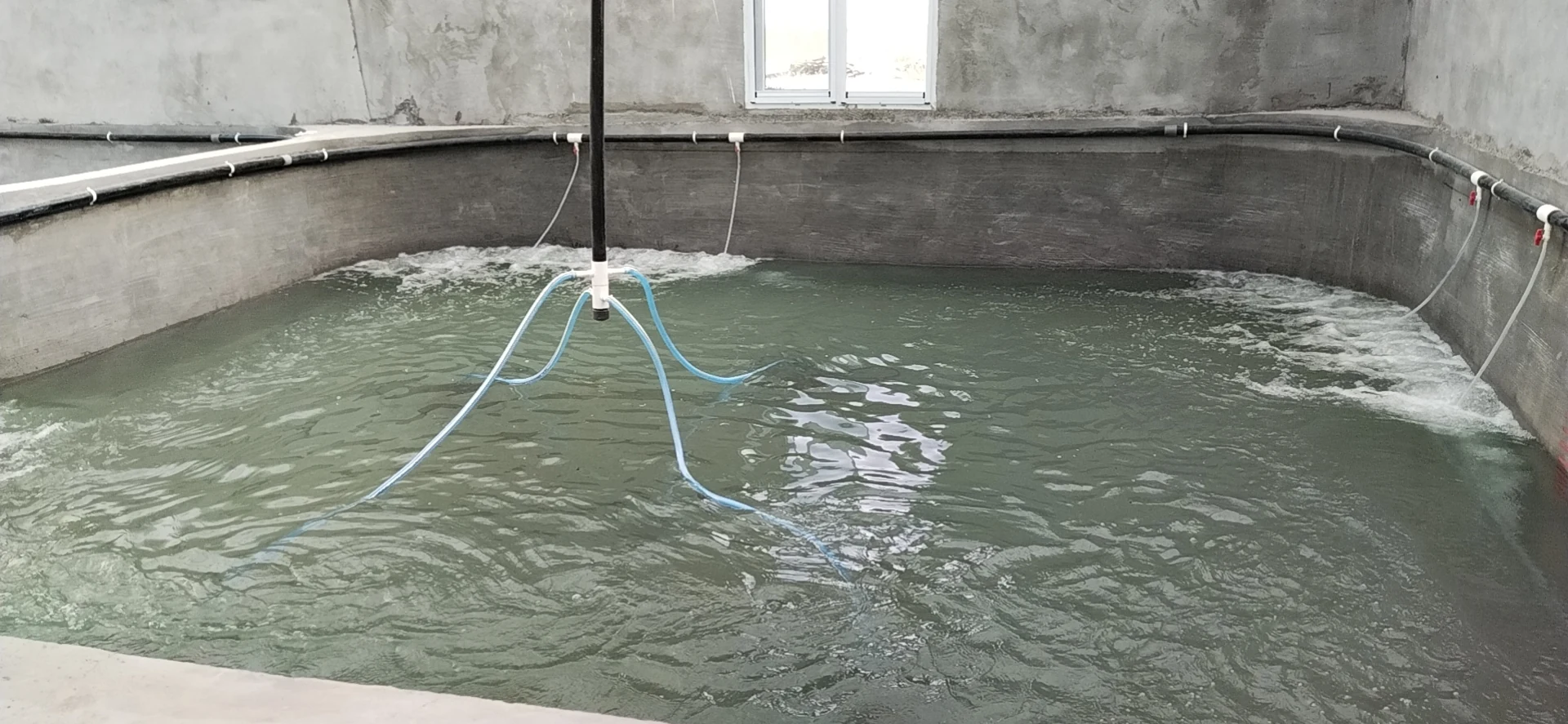
Cement-pond shrimp farming — "small water body + concrete tank + greenhouse or hoop house" — is spreading along China's coast because it reuses existing infrastructure: factory fish tanks, sea-cucumber and abalone ponds, or shrimp hatchery tanks.
Quick Answer
A cement pond is a small, covered, heavily stocked tank, so its aeration is sized by water volume, not by surface area: install 11–15 kW of blower power per 1,000 m³, which is about 8–10 W of oxygen supply per cubic metre. Hold dissolved oxygen above 5 mg/L for the whole crop, purge sludge daily, and expect two to three crops a year — the short cycle is what makes the model pay, and it is also what makes an aeration failure expensive. Because the tank is concrete and the water volume fixed, the blower is the one component you can neither oversize for safety nor undersize for economy.
Cement-pond culture: the numbers that work
Aeration capacity. Install enough oxygenation for the whole water volume: at least 11–15 kW of blower power per 1,000 m³ of water, which works out to 8–10 W of oxygen supply per cubic metre. Diffuse it with 3–5 air stones per square metre or 0.5–0.8 m of nano (microporous) tubing per square metre. Keep dissolved oxygen above 5 mg/L throughout the crop, exchange a modest amount of water daily and purge sludge daily.
Tank size and stocking. Cement tanks are typically 20–60 m². Stock about 400 post-larvae per square metre. The density is deliberately high enough to push shrimp to grow fast and harvest early — short crops cut risk.
Crop cycle. Depending on local climate and facilities, farmers run two to three crops per year, which is where the economics of cement-pond culture beat a single seasonal pond crop.
Aeration Hardware for a Cement Pond
Two diffuser choices cover almost every cement tank.
Air stones are the traditional option: 3–5 per square metre, each a discrete point source — cheap, replaceable one at a time, easy to reposition. The limitation is that each stone oxygenates only its surroundings, so transfer happens in plumes rather than across the whole floor, and a stone that shifts leaves a dead patch behind.
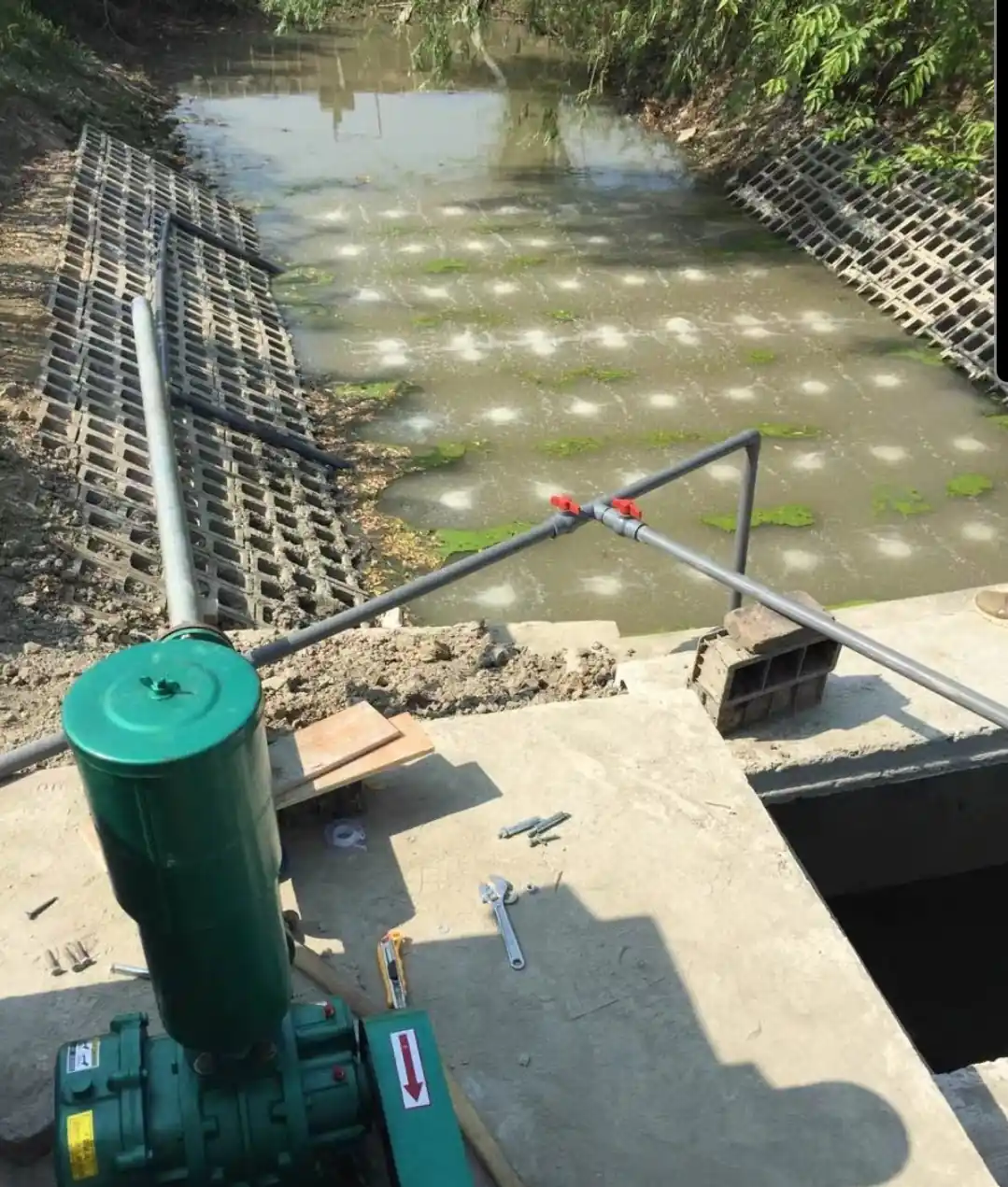
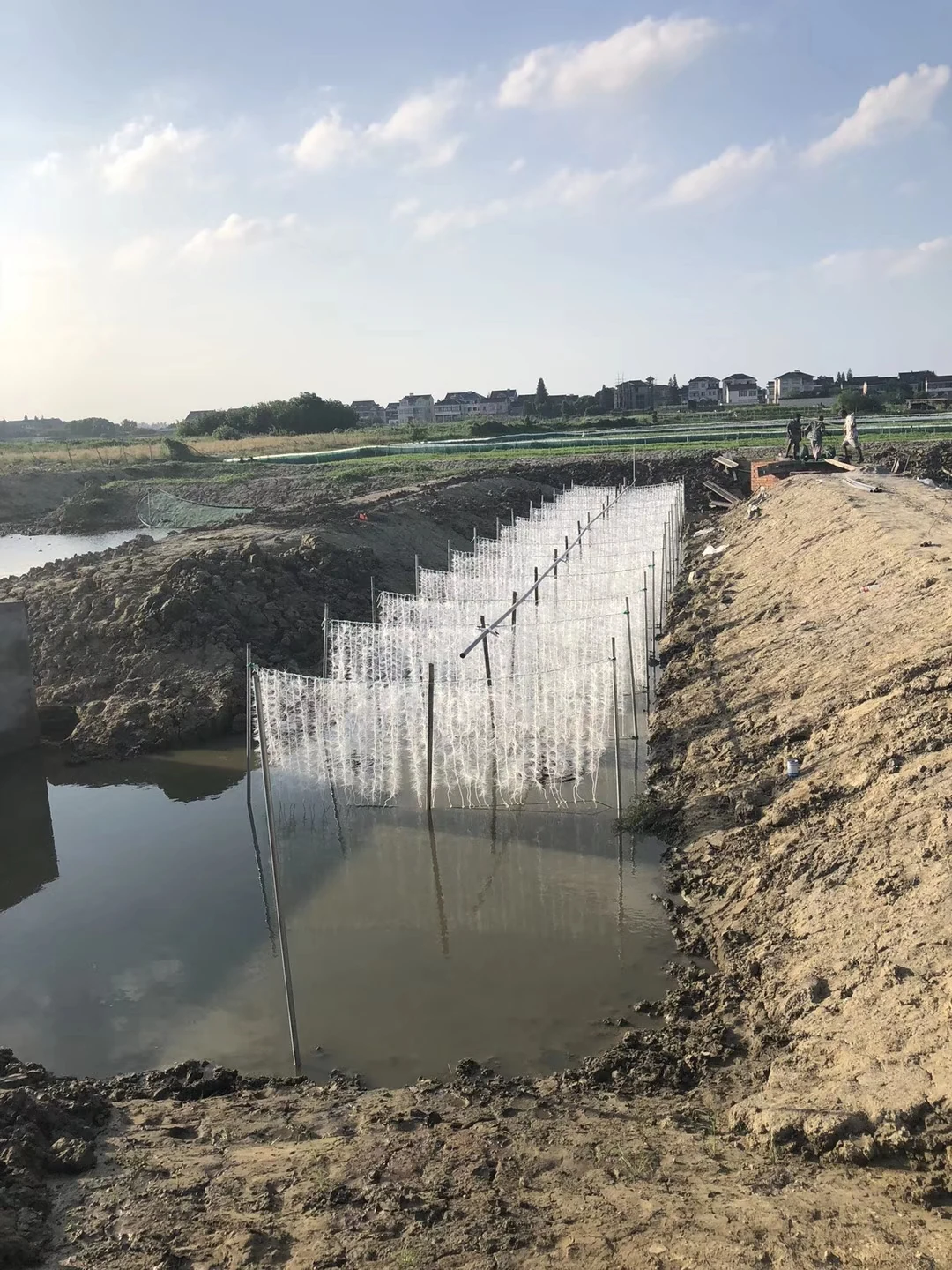
A microporous aeration system using nano tubing is the higher-performance option: 0.5–0.8 m per square metre, far less material than the stone count implies, because the tubing releases bubbles along its whole length instead of at points. Specify the pore size to the water — 0.3–2 mm for freshwater, 0.5–3 mm for seawater — fix the runs 10–20 cm above the tank floor, and keep them 3–5 m apart.
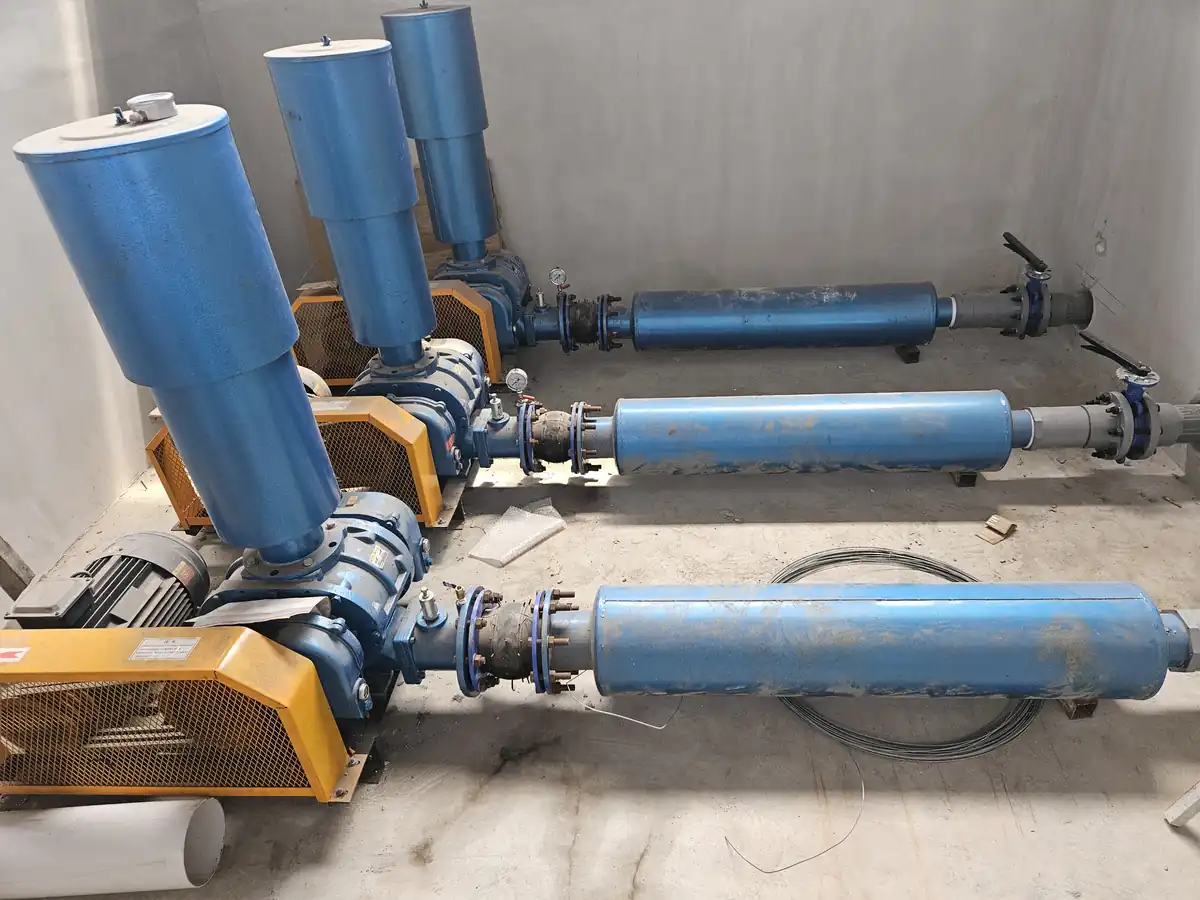
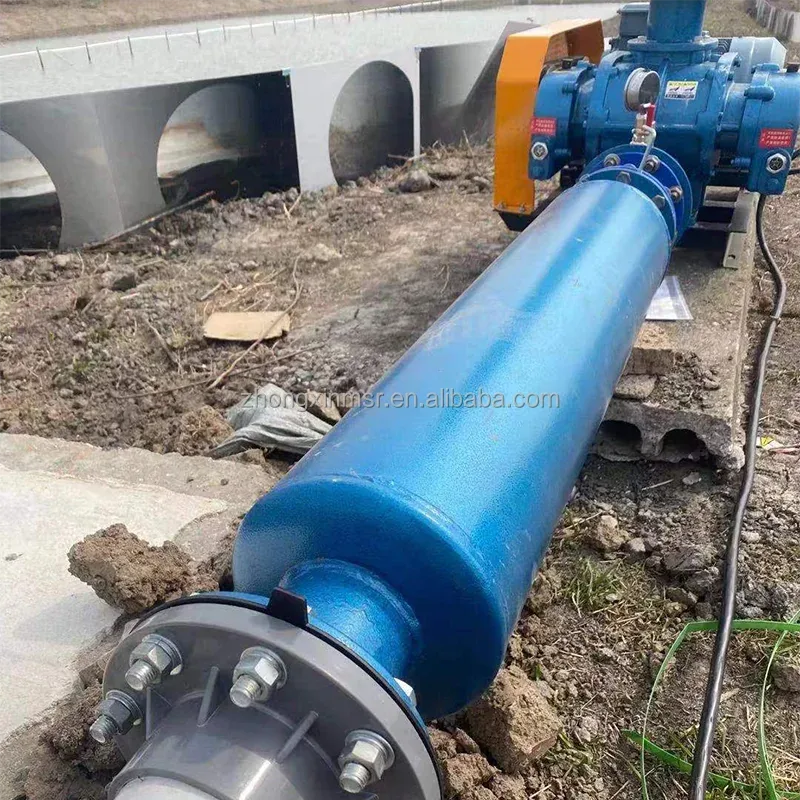
The blower. A roots blower holds its airflow against the back-pressure of a full tank and runs continuously without losing delivery. Size it on two figures that come from different places.
- Airflow from the diffusers: roughly 0.1–0.4 m³/h per metre of tubing.
- Pressure from the water: depth plus 15–20% headroom; a 1.5–2 m tank sits inside the standard 9.8–58.8 kPa band.
Then reconcile both against the 11–15 kW per 1,000 m³ rule. Below that band, the tank is probably under-diffused rather than under-powered; well above it, check tubing length per square metre before buying a bigger machine. Where the main line runs more than a few metres, alternate galvanized steel pipe with PVC.
Water Quality Between Crops
The water is replaced between crops, but the biofilm, the sludge and the diffusers stay — and what happens to those three decides how the next crop starts.
Drain and dry. Empty the tank and let the floor dry. This is the one point in the cycle when sediment can be removed rather than managed, and the only chance to inspect the diffuser layout with the tank empty.
Clear the sludge, then disinfect. Sludge holds the organic load that will otherwise consume oxygen from day one of the next cycle. Clear it out, then disinfect before restocking — lime is the traditional material for this and also helps correct bottom pH.
Flush and inspect the air lines. Main line and tubing both accumulate debris. Flush them, then look for the failures that ruin a crop quietly: a ruptured tube, a stone shifted out of position, a joint passing air at the surface instead of at the diffuser. Replace failed tubing rather than patching it.
Restore the layout, then fit isolation valves. Line spacing and height above the floor are far easier to get right while the tank is empty — and with isolatable branches, one line can later be cleaned without shutting aeration off for the whole tank.
Beyond cement ponds: closed recirculating systems
Traditional open shrimp farming discharges increasing volumes of effluent and is no longer acceptable where environmental rules tighten. A closed recirculating system (RAS) reuses its water through a treatment loop:
source water → storage → filtration and disinfection → shrimp tanks → waste-sediment tank → biological purification (aquatic-plant channel) → filtration → microbial decomposition → back to the shrimp tanks
It brings high density, independence from regional climate, efficient resource use, safer premium product and minimal pollution — the direction sustainable shrimp farming is moving.
Fully controlled (factory) recirculating shrimp farming
The most advanced form treats the tank environment as an industrial process: control the ecology inside the tanks, stock at high density, feed high-quality diets and maximise yield and quality per square metre. It is a high-investment, high-output model. The system is the shrimp tanks plus disinfection, water filtration, aeration and temperature-control units; wastewater passes through settling, filtration, removal of soluble harmful compounds and disinfection, then is re-conditioned — temperature, pH, oxygen and a fresh-water top-up — and returned in a closed loop.
No single design fits every site: the practical system has to be developed from local conditions and accumulated experience. For the biology-driven design of a fully recirculating vannamei system, see vannamei factory recirculating farming, or the greenhouse (non-recirculating) high-density guide if you run covered ponds.
Crop Calendar: What Changes Between the 2–3 Cycles
The two-to-three-crop model is not one cycle repeated — what changes each time is the starting condition. In the first crop of the season the tank is clean and the pipeline empty; the second and third start with whatever the previous crop left behind. Aeration duty itself barely changes (continuous through the crop, pre-dawn hours always covered), but the risk profile does: at the end of a cycle biomass is at maximum and an outage costs the crop, while at the start biomass is small but a slow start cannot be recovered, because the cycle is too short to extend.
FAQ
Q: How much aeration does a cement shrimp pond need? A: 11–15 kW of blower power per 1,000 m³ (8–10 W of oxygen per m³), diffused through 3–5 air stones per m² or 0.5–0.8 m of nano tubing per m².
Q: Air stones or microporous tubing in a cement tank? A: Tubing distributes oxygen more evenly with far less material per m²; air stones are cheaper and individually replaceable. Fix either 10–20 cm above the floor.
Q: Why two to three crops a year instead of one? A: Short crops cut risk: shrimp are harvested before being held through a full season, and the tank is reused rather than left idle.
Q: What dissolved oxygen should I hold? A: Above 5 mg/L throughout — higher than a pond, because stocking density is higher.
Q: What should I do between crops? A: Drain and dry, clear the sludge, disinfect, flush and inspect the air lines, replace failed tubing, and restore the diffuser layout before refilling.
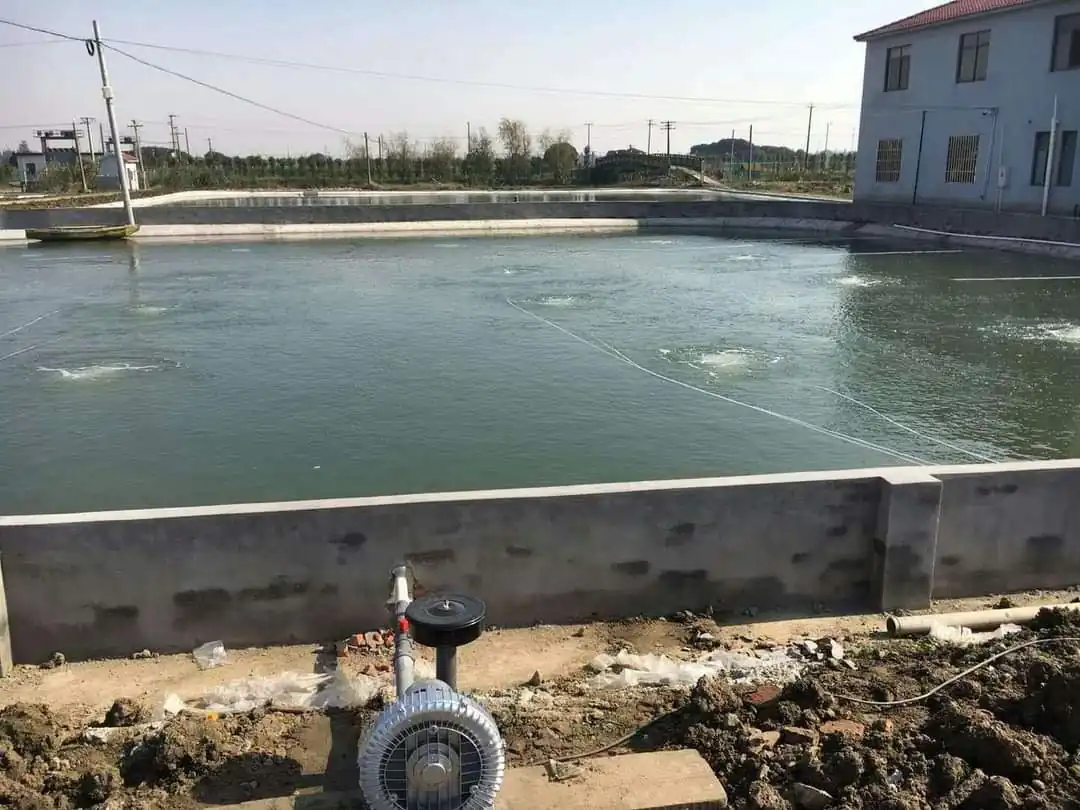
Q: Blower or surface aerator for a cement tank? A: A blower. The back-pressure of a 1.5–2 m tank is easy for a roots blower to hold continuously, and there is no surface spray to lose.
For aeration equipment matched to cement-pond or RAS shrimp farming — roots blowers, air stones and nano tubing sized to your water volume — contact us with your tank dimensions and target stocking density, or see the pond aeration systems we build them from.