Microporous pipe aeration is a completely new farming approach now applied in shrimp and crab pond culture. It not only improves the oxygenation of the farming water but also plays an important role in maintaining a good aquatic ecological environment. Every demonstration farmer who used this new technology in Suining County, Xuzhou City, Jiangsu Province achieved satisfactory results. The practice is summarised below for reference.
1. Pond renovation
Adjust and renovate the pond according to its actual conditions. Renovation should aim at adequate water supply, little silt, fresh water quality and abundant natural feed - providing a good growth environment for fish, shrimp and crab and helping raise yield.
2. Anti-escape facilities
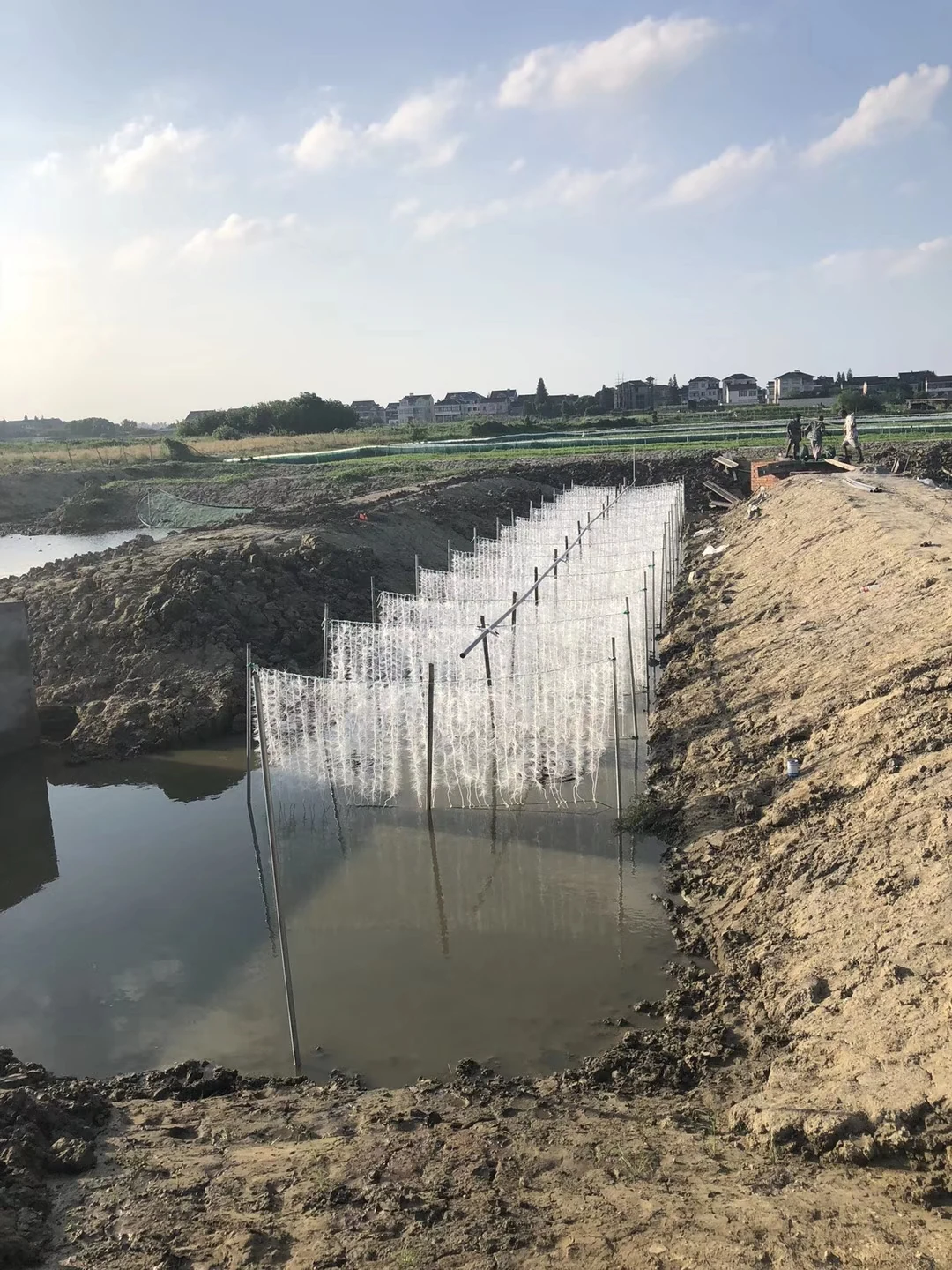
Escape barriers are usually built on the bank, with a height of about 40 cm (1250 px) and an inward slope of about 15 degrees, generally made of double-layer plastic sheeting. Around the pond, drive wooden stakes into the ground roughly every 50 cm (px), press the double-layer plastic against the inner side of the stakes, compact it firmly, punch holes in the plastic and fasten it to the stakes with wire.
3. Microporous tube and roots blower installation
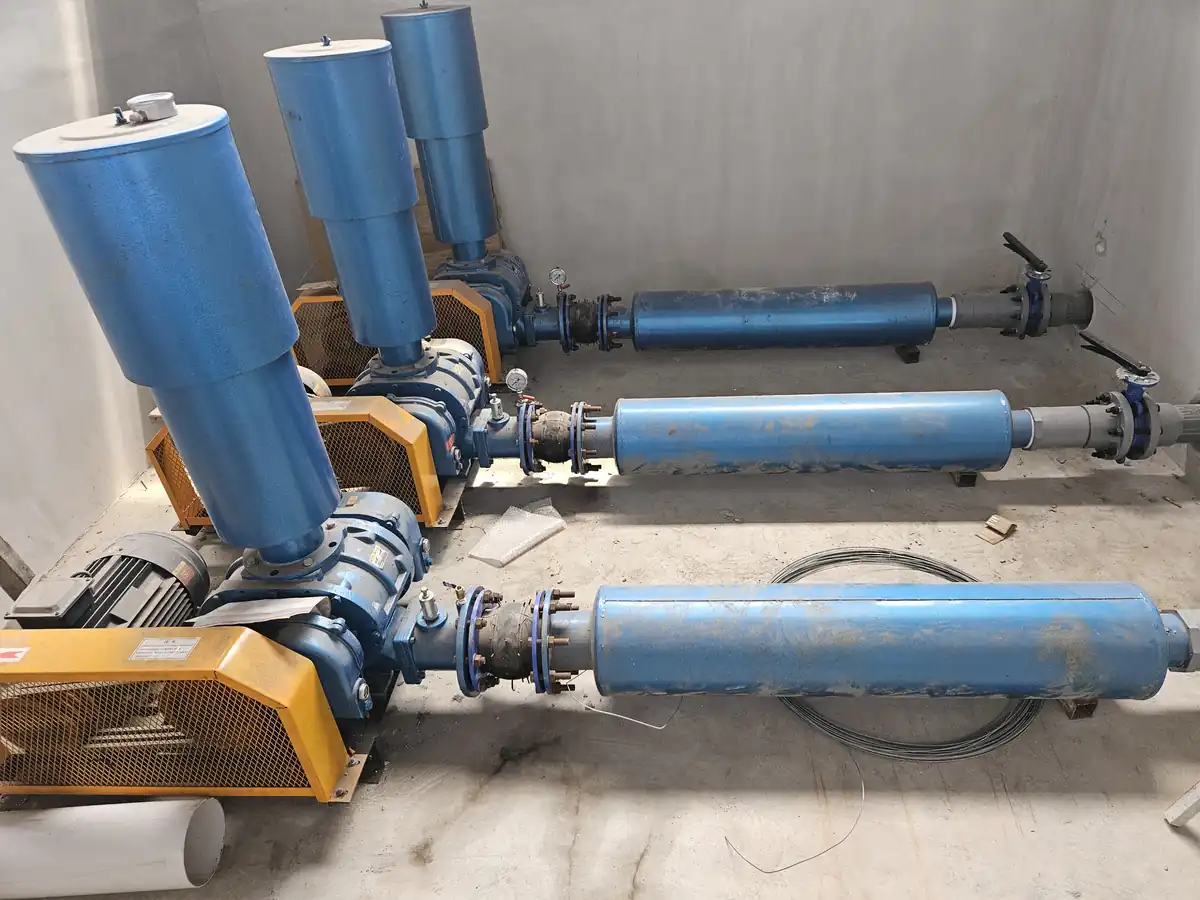
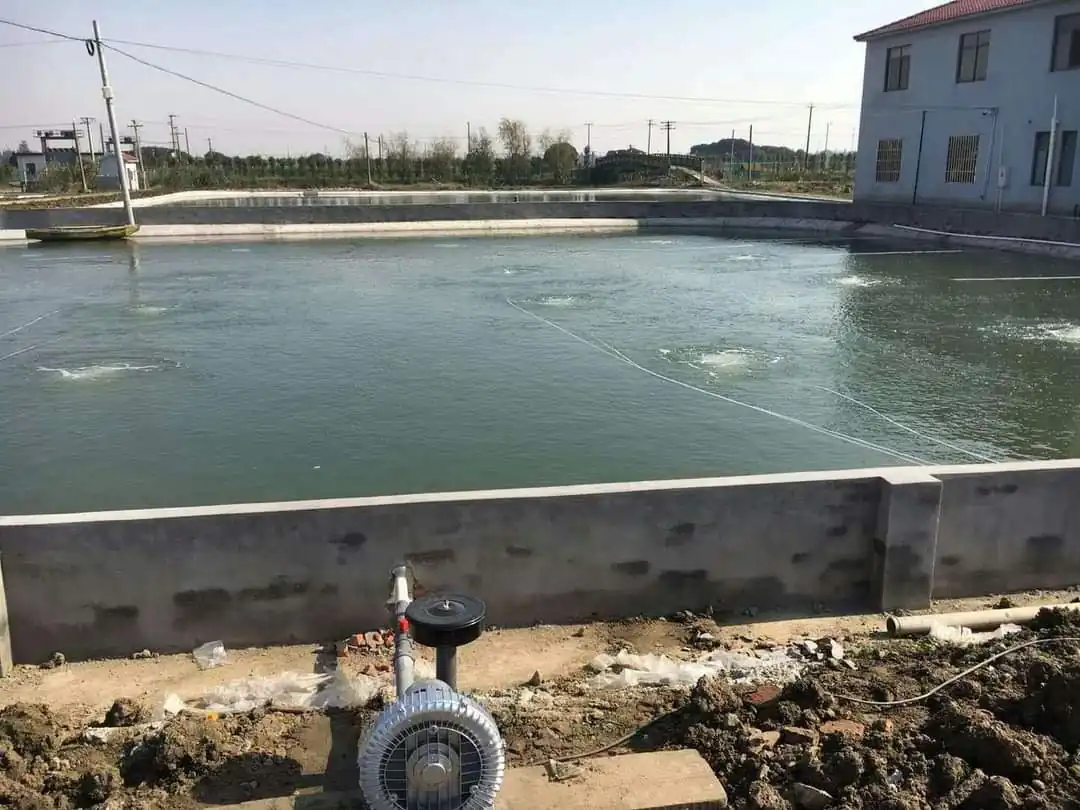
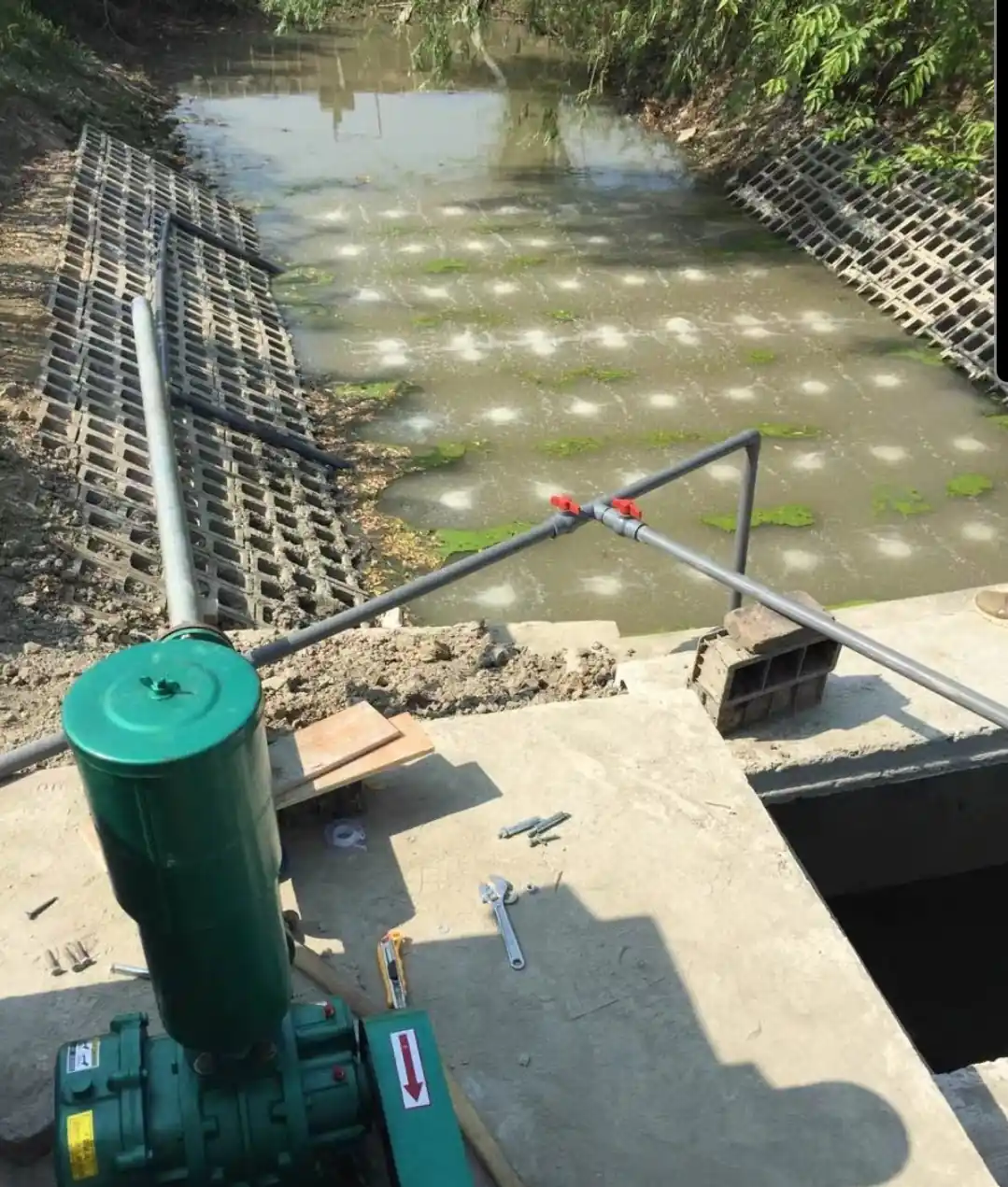
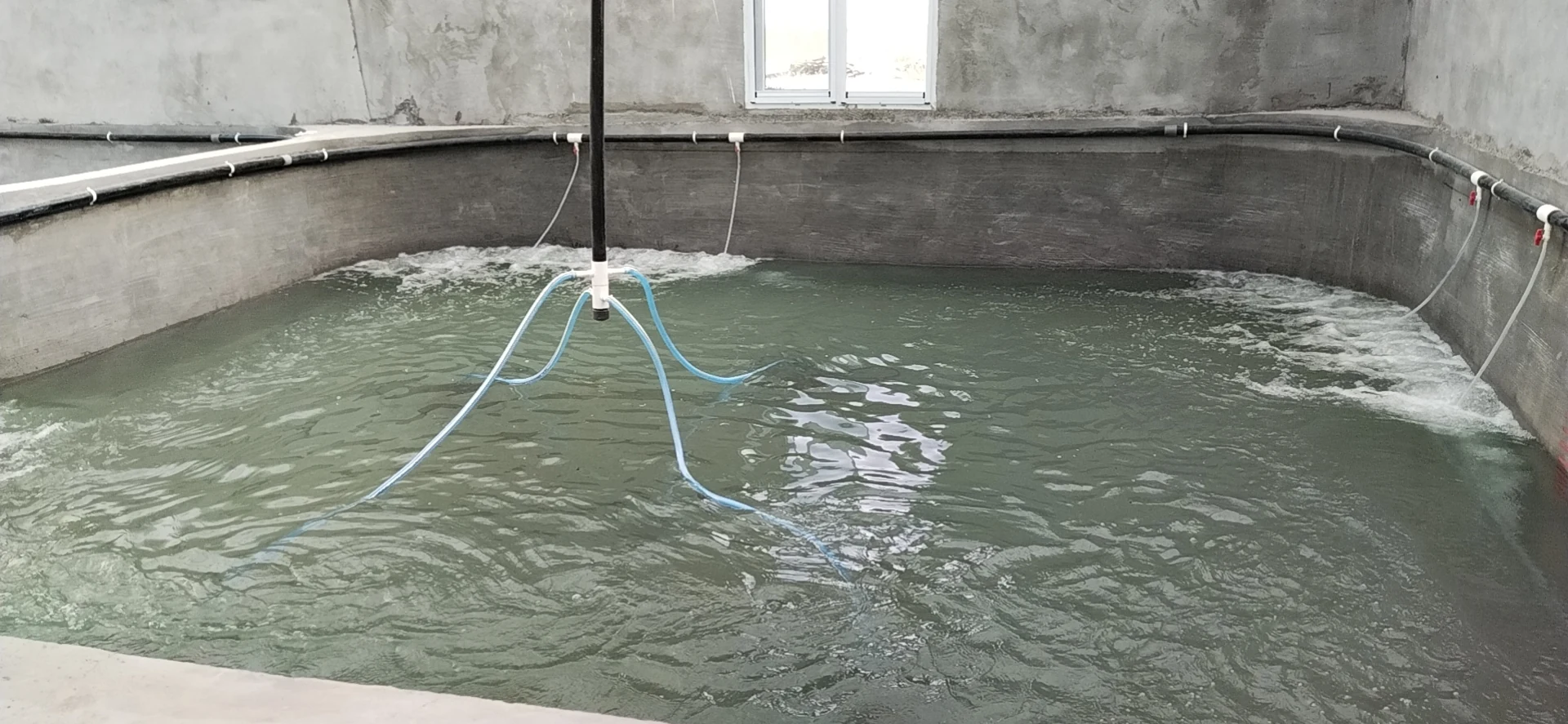
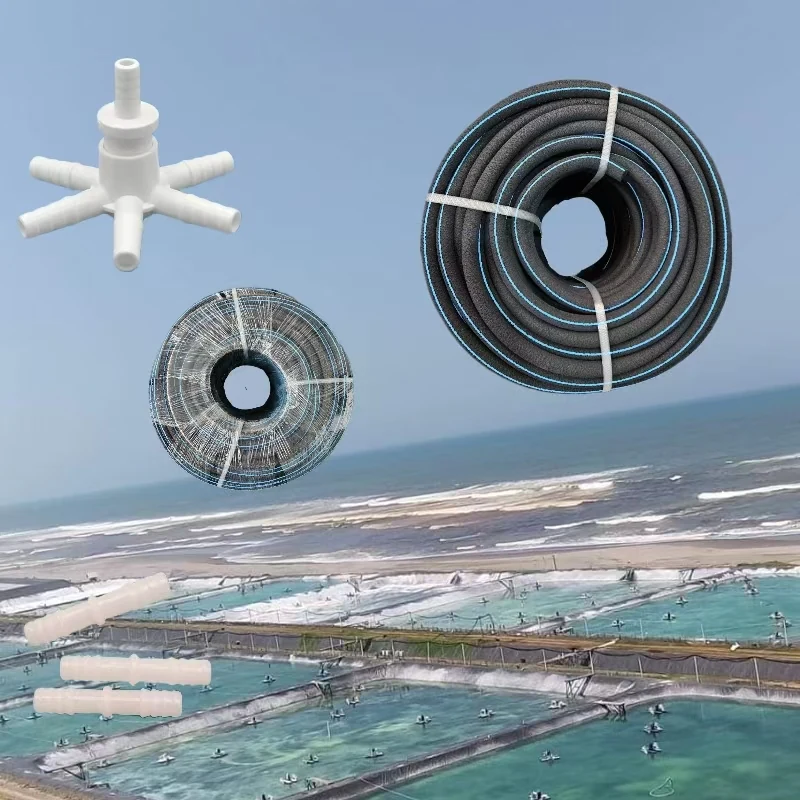
Microporous culture generally uses a short-strip aeration system. During installation, first erect the main air-supply pipe about 12 cm (375 px) above the pond water level, in the middle of the pond, running through the whole pond. Then, centred on the main air pipe, lay one microporous tube on each side in the water: each tube connects at one end to the main air pipe and at the other end about 1 m from the pond bank, laid horizontally. Install the roots blower near the pond; the main pipe delivers air to the aeration tubes around the pond and the aeration discs on the bottom, so the whole pond is aerated.
4. Aquatic grass planting
Depending on the pond size, farmers set the width and spacing of the grass belts to suit the actual scale. The most widely used aquatic grasses include eelgrass (Vallisneria), bitter grass and whorled watermilfoil. The grass-planting area generally must not exceed 30% of the total area and should be distributed evenly. This keeps the water flowing freely through the shrimp and crab ditches without blocking, and also helps river crabs feed and hide from predators.
5. Fry stocking
The stock is mainly freshwater shrimp fry and river crab fry. In spring, stock freshwater shrimp fry at a size of about 2,000 tails/kg; the number can be set according to actual conditions. In early March, stock river crab fry at a size of 60-150 per kg. The stocked shrimp and crab fry should be uniform in size, with complete appendages and lively movement.
6. Water quality control
"Fresh" and "excellent" are the fundamental goals of water quality control. First, change water regularly: keep the water depth at about 0.6 m in March-May, about 0.9 m in June-August, and about 1 m in September-October. During the culture period, add water about once a week, about 12 cm (375 px) each time. Also reduce the water level as needed, promptly remove leftover feed and waste, and keep the pond water clean. Second, regulate dissolved oxygen: in the hot season, run the microporous aeration system about 6 hours per day; in good weather, run it from 2 a.m. until sunrise; on rainy days, extend the aeration time as appropriate.
7. Feed management
Feed mainly mussel meat and good-quality trash fish. The feeding amount is set according to the number of fry and the specific growth stage. Follow the "four fixed" (fixed quality, quantity, time and place) and "four look" rules, then set the feeding amount rationally.
8. Daily management
The focus is on river crab management, with freshwater shrimp management as secondary. In hot weather, patrol the pond every day to fully and systematically understand the growth of the crabs. In heavy rain, focus on crab escape prevention. Also protect the shrimp and crabs from predators such as water rats and frogs. Prevent disease by using quicklime, microbial preparations and other treatments regularly or irregularly. At the same time, keep the water quality up to standard, measure water quality regularly, and keep records so that appropriate measures can be taken.
What the numbers show
On a crab or shrimp pond the difference against a paddle-wheel aerator is measurable. Microporous tubing releases bubbles far finer than the roughly 20 mm bubbles of a conventional aerator, and for the same volume of air that gives the water six to seven times more bubble contact area. Oxygen transfer rises from about 1.1–1.9 kg per kW with a paddle wheel to 3.4–4.9 kg per kW in freshwater and up to 9 kg per kW in seawater. Power demand falls from about 0.75 kW per mu to 0.25 kW per mu, and feed conversion improves from an FCR of 1.1–1.3 to 0.9–1.1, with average yield per mu up by around 30%. Clean the tubes on schedule to slow clogging.
Running the blower is the part that decides whether those figures are realised. One crab grower in Wuwei County fitted a timer to the Roots blower so it switches on and off with the day's conditions: the pond is aerated overnight without a midnight visit, and no separate water change is needed for oxygen. The same grower's point about crab ponds is worth keeping in view — yield and quality track the water first, and the pond weed follows the water.